

One of the things I’ve learnt from doing over 350 coaching sessions with recruiters is they don’t do enough with their job features. In particular, those job features that might be the thing that attracts someone to apply. Here’s an example: “This role has great career options.” Lots of job posts say something like this.…
continue reading...
We’ve probably all seen numerous LinkedIn posts where people have poured out their heart about how arduous their search for a job has been and how desperate they’ve become. Many share details on applications sent, interviews attended and even how many times they’ve been ghosted. Some have gone as far as to suggest they’re close…
continue reading...
Q. What’s a lede? A. The lede is the introductory section in journalism. It’s intended to entice the reader to read the full story. Sometimes it’s spelled ‘lead’ not ‘lede’. It changed in the 1970s to avoid confusion, because ‘leading’ is another term used in journalism. In hot metal typesetting, a narrow strip of lead…
continue reading...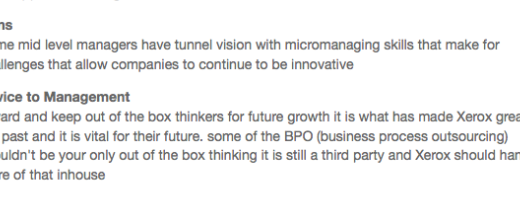
Glassdoor have been in the press recently for all the wrong reasons – in case you didn’t know, a “glitch” in their system attached names to quite a few anonymous complaints, leaving the real people behind them more than a little pissed off. It reminded me of this tip I posted on LinkedIn a while…
continue reading...
You could be forgiven for thinking that our recruitment copywriting courses only teach you how to write really good job ads. You’d be forgiven, but wrong. Good recruitment copy is about more than just your job ads Here’s a copy of an email I received from an experienced technical recruiter who attended our copywriting course…
continue reading...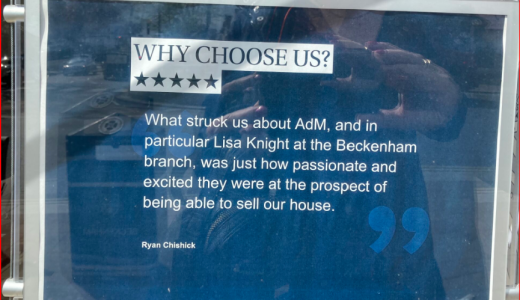
What can you learn from this photo of a testimonial in an estate agent window? And how can you relate it to the use of testimonials in job adverts? There’s good and bad. The good thing about testimonials in job ads Testimonials are a good thing. They’re more convincing than anything you say yourself. This…
continue reading...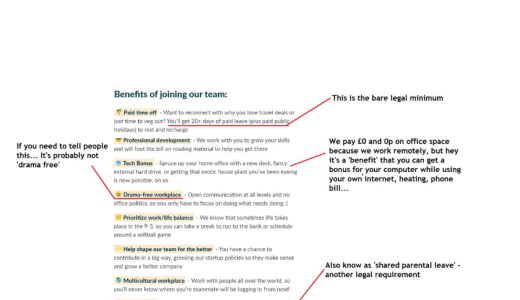
Thanks to Sarah Potter for allowing us to share this image, part of a job ad for a chief copywriter. Here’s the link to her post and its 19 (so far) comments. Sarah is one of our ‘star students’. She attended one of our early courses when she was a recruiter, unleashed her talent as…
continue reading...
Here are 3 questions that – if asked with the appropriate explanations and follow-up questions – will start to differentiate you from other recruiters. They may also help you fill more of these job. Q1: Who have you previously met, worked with or interviewed, that you think might be the right kind of person for this job?…
continue reading...
The bottom line is that most candidates are low-maintenance and do not have particularly high expectations when it comes to their job-hunting experience. They just need the adverts and job briefs to be accurate, the rejections prompt and the interview feedback as honest as legal compliance will allow. If you’re a recruitment agency and you…
continue reading...
Social media entered the mainstream around 2009 and it was from then that the way people communicated with each other started to change. It started to become more conversational, more colloquial even. More people started writing like they speak, rather than like the AI generated love child of a Paralegal and an HR Generalist. Since…
continue reading...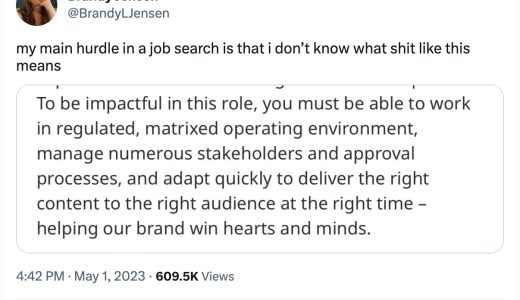
Depending on what statistics you read, some 55% of applicants believe the standard of recruitment practice has declined. I’m surprised it’s that low. Creating a good candidate experience has become the latest marketing trend in recruitment; the rationale being that if candidates are treated well, they’ll think more positively of the company’s brand and talk…
continue reading...
I Googled ‘copywriting advice’ to see what tips the Internet could offer. What could Google tell me that we don’t already cover in our courses? Let’s find out. Know Your Audience The first suggestion is ‘Know your audience’. We completely agree. The more you know about the person you’re trying to attract, and the closer…
continue reading...
There are two polar opposites on the ‘How To Fill A Job’ spectrum. At ‘Point A’ you have the scenario where you have to do a lot of work, from defining the brief, managing the hiring manager, producing great attraction material, researching, speaking to lots of candidates, interviewing, organising the admin and managing the offer. Conversely, ‘Point…
continue reading...
And many of them can be quite demanding – sometimes unreasonably so. Some of them view the job brief meeting as when they get to tell the recruiter what the “ideal candidate” looks like – sometimes right down to what companies they’ve worked for, where they went to university and their personality type – none…
continue reading...
One of the things I’ve learnt from doing several hundred coaching sessions with recruiters over the past 3 years is they don’t do enough with their job features. In particular, those job features that might be the thing that attracts someone to apply. Here’s an example: “This role has great career options.” Lot’s of job…
continue reading...
Although I’ve had many hundreds of job brief meetings (or intake meetings for any American folks looking in), I’m getting old and my memory isn’t quite as good as it used to be. But there is one that sticks in my mind. It was with a “Business Consultant” (whatever the hell that means) and he’d…
continue reading...
Have you ever used any of these words in your job ads? – Incumbent– Applicant– Candidate– Role– Job– Position-Opportunity– Vacancy If yes, stop it. Especially if you added an adjective in front e.g. – Successful applicant– Ideal candidate– Excellent opportunity Recruiters often fall into the trap of writing like other recruiters. They use recruiter jargon.…
continue reading...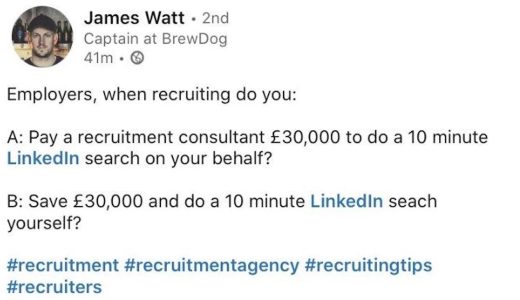
A few years ago, someone quite well-known posted the above comment on LinkedIn – and quickly removed it for some reason. He also happens to work at a company that’s been hugely successful in recent years and recognised as having some interesting product marketing. Recruiters didn’t like it. If you didn’t see any of the…
continue reading...
In the very early days of my social media career, a lot of agency recruiters used to label me a “recruiter basher”, mostly because I used to promote the idea that companies should do whatever they could to bring their recruitment inhouse. Given the amount of recruiter bashing that’s been going on over at LinkedIn these…
continue reading...
It’s a good day to invest 45 minutes or so listening to Mitch Sullivan in conversation with Marcus Cauchi on The Inquisitor podcast, recorded last year. They discuss the importance of *selling* your job if you want to attract the right candidates. “Job adverts have an audience of one”, says Mitch. “Why should a successful candidate who has no…
continue reading...